


You’re home from work at 5 PM. You were stuck in traffic longer than planned. You haven’t eaten since lunch. Work was just too much today. You don’t have anything planned for dinner, let alone for any other humans at home.
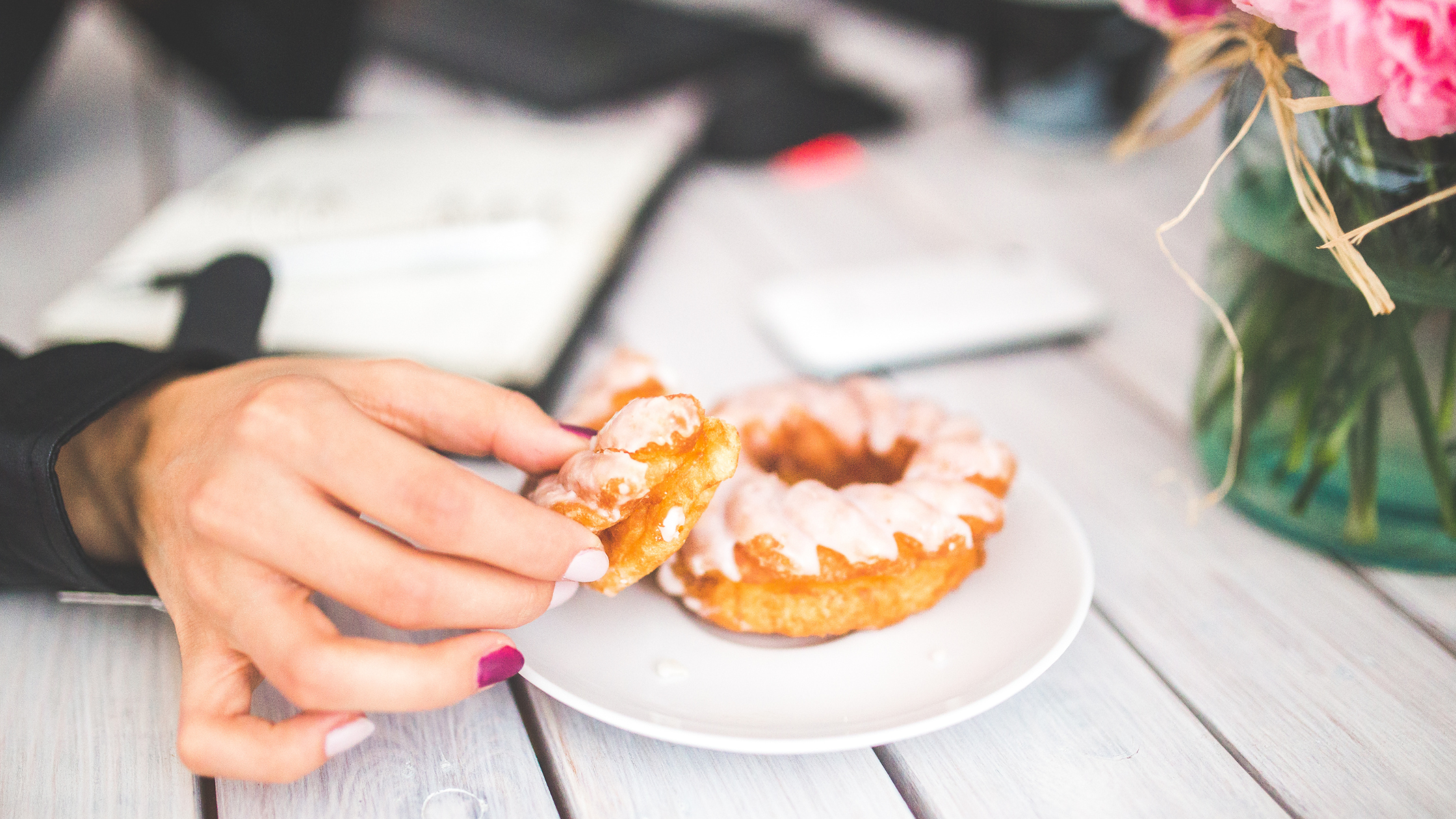
You know what might help you feel better? Those garlic and herb pretzels in the cupboard. Yes, some crispy salty action. Maybe a little glass of wine while you’re making some chicken for dinner too. And if you still need it, that chocolate ice cream is waiting for you in the freezer.
Then you can go to bed less stressed tonight. You deserve it.
…but then you feel bloated and not great the next day.
Does any of this sound familiar? It’s okay if it does. We’ve all been here.
But if you’re trying to lose weight, these emotional eating episodes are probably making you feel majorly stuck.
Let’s get this straight first: emotional eating is normal. We are humans. We are born emotional eaters. It’s part of our survival instincts. We find a connection with food and it’s part of our enjoyable life experiences.
It just becomes a problem when we rely on food to handle emotions like stress, boredom, sadness, or overwhelm more often than other coping mechanisms. It’s a problem because, while eating may help you feel better in the moment, it doesn’t help you feel better afterward. It’s a temporary fix.
On the other hand, what if you decided to go for a long walk outside when you were feeling stressed? It would help you feel better now and later.
If you decide to take an Epsom salt bath before bed to unwind instead of turning to the glass of wine, you would feel better now and later.
Going to therapy on a regular basis would help you feel good now and later to address some root issues related to overwhelm or sadness in your life.
Do you see the pattern here? You have to find approaches to manage your normal emotions in more productive ways so that you feel good now AND later.
Sure, there will be times when you still emotionally eat – again, this is normal. You’re going to want some ice cream if you’re going through a breakup. You’re going to eat some dessert in times of celebration. But if the emotional eating is a regular occurrence and it’s disrupting normal emotional coping – let’s do something about it.
So, how do you curb emotional eating?
- Practice sitting with your feelings & emotions instead of masking or running away from them. PAUSE. Acknowledge WHY you feel this way. What can you do about feeling this way? Tell yourself that you are OKAY. Preach that you are strong. Believe you can power through challenges and hardships.
- Remember that stress is usually not temporary, so a temporary fix is not the solution. There are always going to be stress triggers or emotional triggers in our day-to-day lives, so it’s much more beneficial to focus on activities to create more stress resilience. AKA: support your nervous system (breathwork, journaling, somatic exercises, meditation, etc.). The more resilient you are, the less likely you will feel the need to run to the freezer.
- Remove yourself from the triggering or tempting environments. If your home office is in the kitchen and you tend to open the pantry every single time you get an annoying email you don’t want to deal with, remove yourself from the environment by going for a walk or moving your office to a safer part of the home. If you typically call your friend while grocery shopping and find yourself in the chip aisle after being triggered by the heaviness of the conversation, call her from the car on the way home instead. If you walk home from your 16-hour shift at the hospital only to pass by your favorite candy shop, try taking a different route home.
Try this activity:
Take pen to paper and draw three columns.
Column 1
List the emotions that you feel throughout the day.
Column 2
Note which activities you typically pair with that emotion you are feeling. For example, when you are angry, you open a bottle of wine. When you are bored, you grab the pretzels.
Column 3
Re-evaluate. Is column number two truly helping to support the person you want to be? Or is there a different coping mechanism that would serve you better? For example, the next time you are angry, instead of pouring a glass of wine, try going for a walk instead. The next time you are bored, instead of mindlessly snacking on pretzels, try Facetiming your best friend instead! And be gentle with yourself. If Column Two calls for a snack and in Column Three you feel like a snack is the coping mechanism that truly nourishes and supports you in that moment, be okay with that! Do it in confidence and move on.
Unfortunately, there is no magic pill or easy answer for how to curb emotional eating. It takes work, self-discovery, and self-exploration, plus a little bit of experimentation. The best thing you can do is pause. Acknowledge the emotion in the moment and truly feel it, don’t run away from it. Ask yourself WHY you feel that way and if you can attack the emotion from a different angle. Find an activity that doesn’t just support how you want to feel in the moment but serves you long-term. Work on filling up that bucket with the things that truly make you feel good, instead of filling it out.
Here is a list of practices to try in place of emotional eating:
- Music
- Reading
- Take a walk
- Meditation
- Journaling
- Breathwork (4-7-8 breathing)
- Rest days from higher-intensity exercise
- Yoga
- Good sleep
- Time in nature
- Socialization
- Spending time alone
- Crafting
- Therapy
- Practicing gratitude
- Tapping for body love
- Grounding (feed on sand, grass, dirt, etc)
- Dancing
- Singing
- Laughter
Do you need more hands-on support to get to the root of your emotional eating? Our VIP 1:1 coaching program is a great option. Check out the program details here and apply today!
Coach Elle





Recently on the blog:


leave a comment!
Comments